Deutsch
  Español
  Français
  العربية
  Indonesia
  Italiano
  한국어
한국어  Nederlands
  Polski
  Português
  Türkçe
  简体中文
简体中文  ไทย
ไทย  Tiếng Việt
  Čeština
  فارسی
فارسی  Română
  Filipino
  日本語
日本語 


AI Scams: How to Spot Them Before They Cost you Money
AI scams are a real problem, and they are getting more convincing fast. What used to be obvious spam with poor grammar and weird links can now look polished, personal, and urgent. Scammers use AI tools and generative AI to write cleaner messages, clone voices, and create fake videos that push people into quick decisions.
In this guide, we will break down what modern artificial intelligence scams look like, the biggest red flags, and simple habits that help you protect your accounts, financial information, and identity. We will also show how a VPN like VeePN helps at the network level near the end.
 Oliver Bennett


 Quick Navigation
2. How artificial intelligence scams work in everyday life
3. Common AI scams to watch for right now
4. Telltale signs of AI scams and how to spot a fake AI interaction
5. How to protect yourself from AI scams without getting paranoid
6. How VeePN helps when AI scams target your accounts and data
FAQ
This is not just hype. The FBI’s IC3 reported that cybercrime losses reached $16.6 billion in 2024, which shows how expensive online fraud has become overall. The FBI has also warned that criminals now use artificial intelligence for text, image, audio, and video impersonation scams.
Why AI scams are different from traditional scams
Classic fraud is still around, but AI powered scam campaigns move faster and look more believable than many traditional scams. Scammers can now generate thousands of polished phishing messages in minutes, test what works, and scale it across email, social media, and mobile apps.
Microsoft’s Digital Defense Report highlighted exactly why this is dangerous. It noted that people clicked AI-written phishing emails far more often than human-written ones in Microsoft’s internal testing. That is a huge warning sign for everyday users and teams.
Another issue is what many experts call a trust problem. You start doubting everything, from phone calls to video calls to urgent messages from a family member. That is the real damage of AI technology in fraud. It creates confusion and pressure, which is exactly where scammers win.
How artificial intelligence scams work in everyday life
Most artificial intelligence scams follow the same pattern. The tools change, but the psychology does not. The scammer tries to create urgency, fear, or excitement, then pushes you to share sensitive information, send money, or give access.
Here are the common building blocks:
- AI-generated text for fake support chats, fake recruiters, and fake bank alerts. These messages often look cleaner than old-school spam. They may mention your city, your job, or even a recent post because scammers scrape public data from the world of social media. The result feels personal, which makes people drop their guard.
- AI voice cloning for panic calls. A scammer can mimic a family member or someone from your financial institutions team and ask for urgent help. The voice may sound “close enough” to trigger fear, especially if the call is emotional and rushed. The goal is to make you act before you think.
- Deepfake videos and fake meetings. Deepfake scams now include fake executives, fake investment experts, and fake authority calls. In a well-known 2024 case, an Arup employee was tricked in a deepfake video call and approved multiple transfers totaling about $25.6 million.
- Fake websites and cloned login pages. This is still one of the easiest ways to steal passwords, bank accounts, and financial accounts access. A fake sign-in page can look fully legitimate, especially when paired with a convincing text or email.
This is why we always recommend a zero-trust habit. If a message asks for money, accounts, or identity details, slow down and verify through a trusted channel first.
Common AI scams to watch for right now
The scam formats below are the ones we see most often across consumer fraud reports, threat research, and security alerts. The names may change, but the tricks are very similar.
AI voice cloning scams that target a family member emergency
This is one of the fastest-growing voice scams because voice cloning tools are easy to use now. A scammer grabs a short audio clip from social media, a public video, or even a voicemail greeting, then creates an AI voice copy.
They call and say your son, daughter, partner, or friends are in trouble and need money right now. The call may include crying sounds, pressure, and “do not tell anyone” instructions. If you get a call like this, hang up and call back on a number you already trust. The FTC and FBI both recommend verifying identity through a separate channel.
AI-generated phishing emails and phishing messages
Modern phishing emails and phishing messages no longer need obvious spelling mistakes. AI helps scammers write cleaner text, mimic brand tone, and personalize attacks using data pulled from public profiles or old breaches.
You may see fake messages from companies, delivery services, HR, cloud apps, or banks. They often push “urgent” actions like resetting passwords, reviewing a blocked payment, or confirming a login. If you click, you land on fake websites built to capture passwords, MFA codes, or card details.
AI-generated investment fraud and pig butchering
This is where things get ugly fast. Scammers use AI generated personas, fake screenshots, polished websites, and sometimes fake “advisors” on video to sell fake crypto or trading opportunities. This includes investment fraud and pig butchering schemes where the victim is groomed over time.
They may show fake profit dashboards, fake testimonials, or even fake customer support. Check Point and other security researchers have documented how AI can be used to build entire fake expert ecosystems for fraud.
Identity theft and synthetic identity fraud
Some criminals use stolen personal data for straight identity theft. Others mix real and fake data to build synthetic profiles that can open accounts or bypass checks. This can affect loans, cards, and online payment platforms, even if you were careful with one service.
The hard part is that victims often discover it late. That is why security checks, breach alerts, and account monitoring matter just as much as scam awareness.
Telltale signs of AI scams and how to spot a fake AI interaction
The tricky part is that some AI-generated content looks very polished. Good quality does not mean it is real. Bad quality does not always mean it is fake either. So instead of looking for one clue, look for a cluster of telltale signs.
Red flags in messages, calls, and video
- Unusual requests for gift cards, crypto, wire transfers, or account codes. This is the biggest one. Real support teams and real banks do not ask for one-time codes or passwords in a panic message. If someone pushes you to send money immediately, treat it as suspicious.
- Pressure for quick decisions. Scammers want speed because speed kills verification. They may say “your account will be closed,” “the police are involved,” or “your family member is in danger.” Slow the process down on purpose.
- “Looks real” but avoids verification. A fake caller may refuse to switch channels, refuse a callback, or keep talking over you. A scammer using AI voice cloning depends on momentum. Break momentum and the scam often falls apart.
Red flags in fake websites
- Slightly wrong domain names. This is still common. One extra letter, a strange subdomain, or a different ending can lead to fake websites built to steal your login.
- Weird login flow or repeated MFA prompts. If a site asks for your login twice or asks for codes in a strange order, stop. Many phishing pages are designed to capture your credentials and then relay them live to the real service.
- Missing trust basics. Broken pages, random pop-ups, fake chat windows, or no clear company info are still common. AI may improve the wording, but scammers still cut corners on the full experience.
As a rule, verify first, then act. Use the official app or type the company website manually instead of tapping links from messages.
How to protect yourself from AI scams without getting paranoid
You do not need to become a cybersecurity expert. You just need a few habits that work in real life.
Use a zero-trust habit for urgent money and account requests
Assume any urgent request could be fake until you confirm it. If someone asks for a payment, a code, or access to your accounts, stop and verify through a trusted phone number or an official app. For family safety, set a private code phrase with close relatives. It sounds simple, but it works very well against AI voice cloning panic calls.
Turn on multi-factor authentication everywhere important
Use multi-factor authentication and, when possible, stronger methods like app-based codes or hardware keys. This makes it much harder for scammers to break into your financial accounts even if they steal a password. MFA does not stop every scam, but it blocks a lot of damage after a phishing hit. It is one of the most practical protections you can enable today.
Lock down social media and public audio
Scammers use public clips to train voice cloning and build profiles for personalized fraud. Make your profiles private where possible, remove public phone numbers, and be careful with long voice or video clips. This does not mean disappearing from the Internet. It just means giving scammers less raw material to work with.
Double-check news, videos, and “expert” advice
With fake news, deepfakes, and fake investment channels, it is smart to verify from at least two trusted sources before making financial decisions. If a video, post, or “advisor” is telling you to move money fast, pause.
That simple pause protects you from many fraud schemes, especially investment scams.
How VeePN helps when AI scams target your accounts and data
A VPN will not stop all scams. But it does reduce your exposure in the places where many scams begin, especially public Wi-Fi, phishing pages, and tracking-heavy browsing. Here is how VeePN helps as a practical extra layer:
- AES-256 encryption. VeePN encrypts your internet traffic so people on public Wi-Fi cannot easily snoop on your activity. This matters when you open banking apps, payment pages, or email on the go.
- IP address masking. VeePN hides your real IP and gives you a different one, which helps reduce tracking and profiling. It also makes it harder for scammers and shady sites to tie your activity to your location.
- Kill Switch. If the VPN connection drops, Kill Switch stops traffic so your real connection does not leak suddenly. That is useful when you are on unstable networks and dealing with sensitive accounts.
- NetGuard malicious-site blocking. VeePN can block known malicious domains and trackers before they load. This is especially helpful against fake websites and phishing pages shared through texts, ads, or social posts.
- Breach Alert. Breach Alert warns you if your credentials appear in known leaks. That gives you a chance to reset passwords and lock down accounts before scammers use stolen data for identity theft.
- Antivirus for supported devices. VeePN Antivirus adds another layer against malware that can steal logins or banking data. This is useful if a scam link leads to a malicious download instead of a fake login page.
Try VeePN without risks with a 30-day money-back guarantee.
FAQ
Some of the most common AI scams include AI voice cloning calls, phishing emails, fake tech support chats, investment fraud, and deepfake video impersonation. Many of them use AI tools to sound more real and push you into fast action. Discover more in this article.
Here are 5 big ones we see now:
- AI voice emergency calls pretending to be a family member
- AI generated phishing messages linking to fake websites
- Deepfake video calls with fake bosses or authority figures
- Crypto and pig butchering investment scams
- Account takeover scams that steal financial information and MFA codes
Discover more in this article.
You usually cannot tell from one clue alone. Look for red flags like pressure, strange timing, unusual payment requests, and refusal to verify identity on a trusted channel. In calls or videos, the scam may sound or look real, so always confirm through a second method.
A “fake AI” scam often shows up as fake support, fake experts, or fake company messages. Check the website domain, avoid links in random messages, and never share sensitive information or passwords just because a message looks polished. If in doubt, stop and contact the real company directly. Discover more in this article.


VeePN is freedom
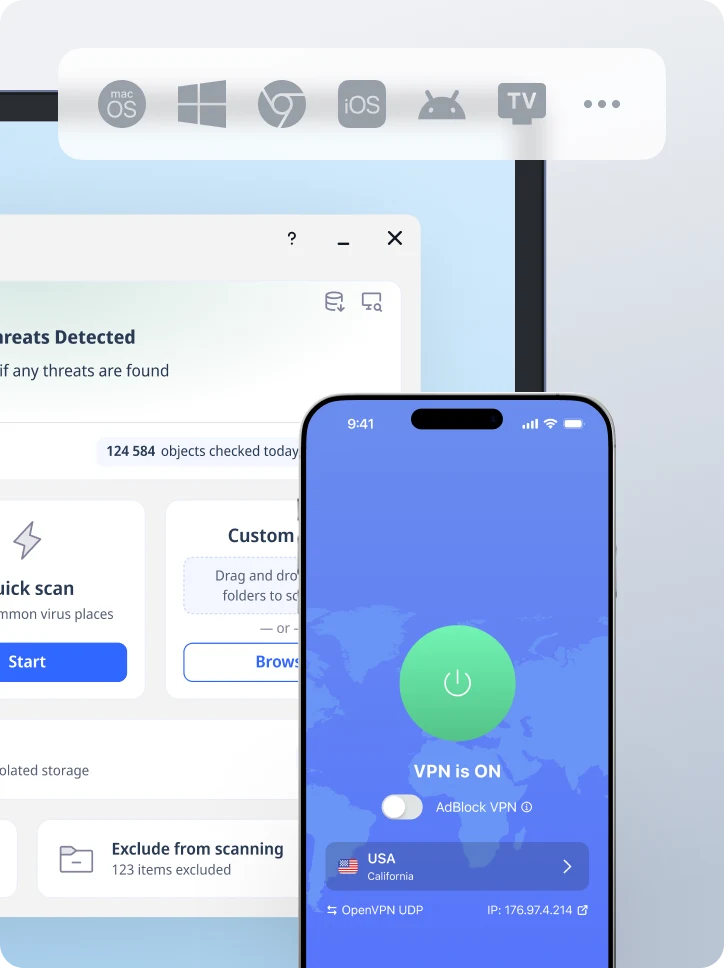
Download VeePN Client for All Platforms
Enjoy a smooth VPN experience anywhere, anytime. No matter the device you have — phone or laptop, tablet or router — VeePN’s next-gen data protection and ultra-fast speeds will cover all of them.
Download for PC Download for Mac IOS and Android App
Want secure browsing while reading this?
See the difference for yourself - Try VeePN PRO for 3-days for $1, no risk, no pressure.
Start My $1 TrialThen VeePN PRO 1-year plan