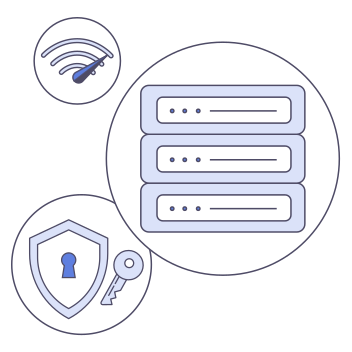
Shadowsocks is open-source encrypted proxy-based technology, not a traditional full VPN protocol. VeePN offers it as an HTTPS proxy option intended for web traffic in limited network environments.
Shadowsocks is technology for sending supported traffic through an encrypted proxy connection. A compatible client-side component prepares the traffic, passes it through a Shadowsocks server, and receives the response through the same proxy connection.
Shadowsocks is not a traditional full VPN protocol. A VPN protocol such as WireGuard, OpenVPN, or IKEv2 is used to establish a VPN tunnel. A proxy-based option uses a different connection model, and the traffic it handles depends on how the software is integrated and configured.
This distinction matters because encryption does not automatically describe which traffic an implementation handles. Exact traffic coverage cannot be determined from the word Shadowsocks alone.
VeePN includes Shadowsocks among the connection options available in supported apps. The phrase Shadowsocks VPN is sometimes used as a search term, but encrypted proxy-based technology is the more accurate technical description.
How does Shadowsocks work?
The following sequence is a simplified model of how Shadowsocks generally works. It explains the technology, not the confirmed internal architecture of VeePN. Exact traffic handling and routing depend on the implementation and configuration.
1
Prepare supported traffic
A compatible app or system integration directs supported traffic to the proxy connection. Which traffic enters this connection depends on how Shadowsocks is integrated into the device or app.
2
Encrypt the handled traffic
Shadowsocks encrypts the traffic passed into the proxy connection. This protection applies to the traffic being handled, so it should not be interpreted as proof that every connection on the device is included.
3
Send it through a Shadowsocks server
The encrypted traffic travels from the client-side component to a Shadowsocks server. The protocol supports the connection between these components without requiring the destination website or service to understand Shadowsocks.
4
Forward it to the destination
The server processes the proxy request and forwards it to the intended internet destination. Responses return through the Shadowsocks connection. Encryption provided by a destination, such as HTTPS on a website, remains a separate layer.
Shadowsocks benefits, limitations, and use cases
A connection option for difficult networks
Shadowsocks was designed for network conditions where easily identified connection patterns may face restrictions. This can make it worth trying when a conventional VPN connection is difficult to establish. That suitability is not a promise of access. Network controls vary and change over time, and the same connection option may work differently across networks. Shadowsocks should be treated as one available option, not as a guaranteed way around every restriction.
Encryption for traffic the proxy handles
Shadowsocks encrypts traffic carried between its compatible client-side component and server. This helps protect the contents handled by that part of the connection while they cross the network. The boundary is important. Shadowsocks encryption does not by itself establish anonymity, confirm whole-device coverage, or describe how a particular service handles DNS, public IP addresses, or connection metadata. Those outcomes depend on the wider implementation and configuration.
VeePN positions Shadowsocks as an HTTPS proxy for web traffic in limited network environments. Exact scope and behavior depend on the app implementation. Compare it with the broader options on the VeePN protocols page.
Shadowsocks vs a traditional VPN
The better option depends on your device, the connection options available in the app, current network conditions, the traffic you need to cover, and your specific use case. Neither connection model is always the right choice.
CriterionShadowsocksTraditional VPN
Technology typeEncrypted proxy-based technologyA VPN protocol and service integration used to create a VPN tunnel
Primary purposeProvide an encrypted proxy connection, including an alternative for difficult network conditionsProvide a VPN connection for broader privacy and traffic-routing needs
Traffic coverageDepends on the implementation, integration, and configurationCommonly designed for broader device traffic, but still depends on the app and operating system
Connection modelSupported traffic passes through an encrypted proxy connection and a Shadowsocks serverTraffic enters a VPN tunnel between the device and VPN server
Privacy expectationsEncryption covers handled traffic, but does not automatically provide anonymity or whole-device coveragePrivacy depends on the provider, protocol implementation, app features, and traffic included in the tunnel
Challenging networksDesigned with restrictive conditions in mind, but detection and blocking remain possibleResults vary by VPN protocol and network
Important limitationScope and behavior can differ by implementationA VPN connection can be easier to identify or restrict in some networks
A good fit whenA supported proxy-based option suits the network and required trafficBroader VPN traffic coverage is the priority
Which VeePN connection option should you choose?
Choose Shadowsocks when a traditional VPN connection is difficult to establish and an HTTPS proxy for web traffic fits the situation.
Choose WireGuard as a recommended starting point for an efficient everyday VPN connection.
Choose OpenVPN when you need TCP or UDP flexibility, router support, or manual setup.
Choose IKEv2 when connection recovery during network changes matters on a supported device, including iOS.
Where is Shadowsocks available in VeePN?
VeePN lists Shadowsocks as available on Windows, macOS, and Android. It is not listed for the other platforms and setup categories below.
Yes. Shadowsocks encrypts traffic handled by its proxy connection between the compatible client-side component and server. The exact traffic included depends on the implementation and configuration, so encryption should not be interpreted as confirmed whole-device coverage.
Is Shadowsocks secure?
Shadowsocks provides encryption for handled traffic, but protocol encryption is only one part of connection security. The implementation, configuration, server operation, destination encryption, and traffic scope also matter. Shadowsocks does not automatically make a user anonymous or provide the same coverage as a full VPN tunnel.
Why is Shadowsocks not available in my VeePN app?
VeePN currently lists Shadowsocks for Windows, macOS, and Android. If it does not appear on one of these platforms, the available options may depend on the installed app version. VeePN does not list Shadowsocks for its other app platforms or manual setup.
Can Shadowsocks be detected or blocked?
Yes. Shadowsocks was designed to be more difficult for some network controls to identify, but it is not undetectable. Restrictive networks can use traffic analysis and other techniques to detect or block Shadowsocks. No connection option works in every network.
Try Shadowsocks with VeePN
Choose Shadowsocks in a supported VeePN app when it fits your network conditions, or select a traditional VPN protocol when broader VPN traffic coverage better matches your needs.